What Safety Certificates Do Scottish Landlords Need?
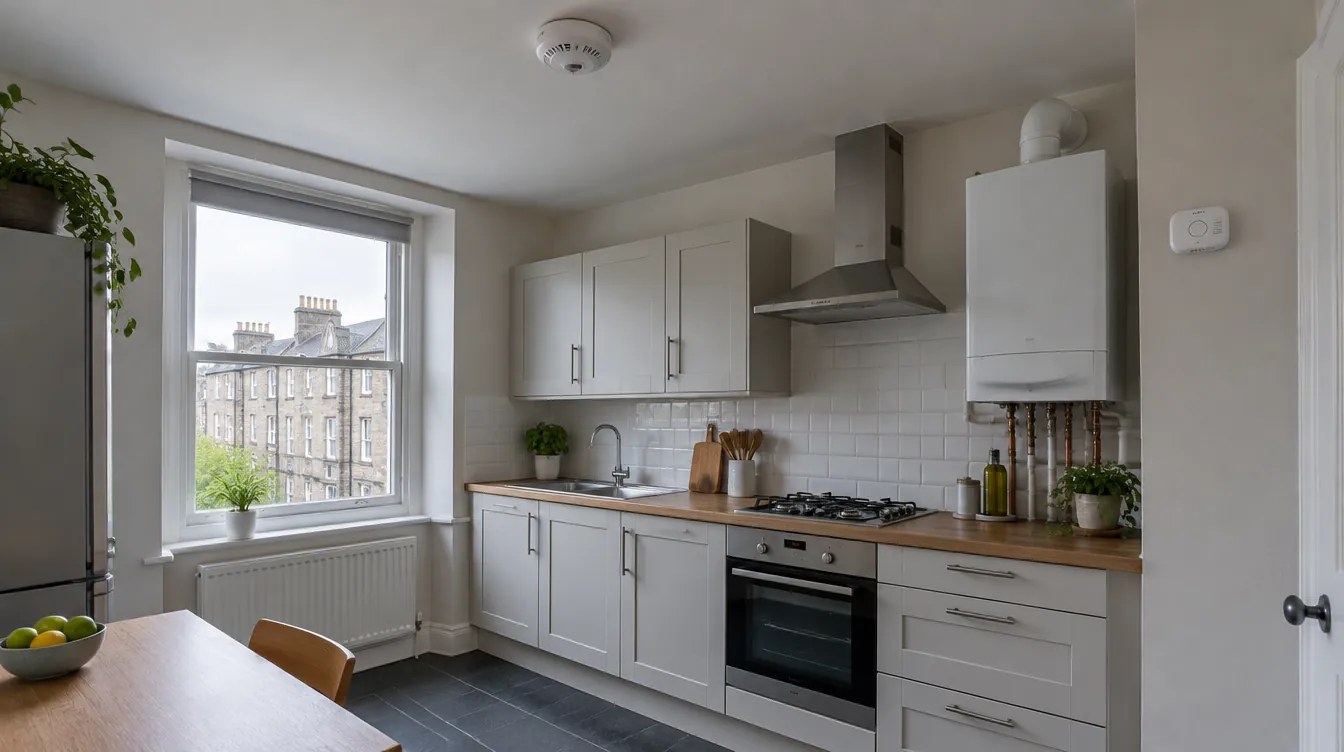
Scottish landlords need an annual gas safety check, an electrical safety inspection (an EICR plus PAT testing) at least every five years, interlinked smoke and heat alarms, a carbon monoxide alarm wherever there is a fixed combustion appliance or flue, a legionella risk assessment and a valid Energy Performance Certificate.
These checks sit under the Repairing Standard, which every private rented home in Scotland must meet at the start of a tenancy and throughout it. The current statutory guidance has applied since 1 March 2024.
The Safety Checklist at a Glance
| Check | How often | Who can do it | What the tenant gets |
|---|---|---|---|
| Gas safety check | Every 12 months | A Gas Safe registered engineer | A copy within 28 days of the check, or before a new tenancy starts |
| Electrical Installation Condition Report (EICR) | Before first letting, then at least every 5 years | A skilled person (electrically), usually a SELECT, NICEIC or NAPIT member | A copy of the latest EICR before the tenancy starts |
| PAT testing of landlord appliances | At least every 5 years, often more frequently | A skilled person, or a trained landlord | Included with the electrical safety records |
| Smoke and heat alarms | Fitted and working at all times | Installer of your choice | Advice on weekly testing |
| Carbon monoxide alarms | Fitted and working at all times | Installer of your choice | Advice on monthly testing |
| Legionella risk assessment | Before letting, reviewed when anything changes | The landlord or a competent person | Advice on water safety where relevant |
| Energy Performance Certificate | Valid for 10 years | An approved EPC assessor | A copy of the EPC |
Gas Safety
The Gas Safety (Installation and Use) Regulations 1998 apply across Great Britain, and the Scottish Repairing Standard guidance sets out what they mean for private landlords. You must make sure that every gas appliance, fitting and flue you provide is safe to use. This includes the pipework from the meter to the boiler, cooker and any heaters, as well as portable appliances such as LPG cabinet heaters.
Your duties are to:
- keep gas fittings and flues in a safe condition
- arrange a safety check on each gas appliance and flue every 12 months
- use an engineer who is on the Gas Safe Register
- give existing tenants a copy of the safety record within 28 days of the check, and give new tenants a copy before the tenancy starts
- keep the record for at least two years
You can have a check carried out up to two months before it is due and keep the original renewal date, as if the check had been done exactly 12 months after the last one. If you use this flexibility, keep the records until two further checks have been carried out, so you can show the timings were met.
Give your tenant at least 48 hours' notice of access. If they will not agree a suitable time, you can apply to the First-tier Tribunal for Scotland (Housing and Property Chamber) using the right of entry procedure. You are not responsible for appliances your tenant owns, but you should make sure they understand their own responsibilities.
Electrical Safety: the EICR and PAT Testing
Since December 2015, private landlords in Scotland have had to arrange an electrical safety inspection before a property is first let, and then at intervals of no more than five years. The inspection has two parts.
The Electrical Installation Condition Report (EICR) covers the fixed installation: the consumer unit, wiring, sockets, switches and light fittings. It also includes a visual inspection of fixed equipment such as storage heaters, electric showers and hard-wired alarms. A landlord who holds an Electrical Installation Certificate (EIC), for example for a new build or a full rewire, can use it instead, as long as it is less than five years old and the next inspection date has not passed.
PAT testing covers the portable appliances you provide, such as fridges, washing machines, kettles and toasters. Appliances bought new less than a year before the test do not need to be tested yet, but they should be listed on the equipment register. Appliances belonging to your tenant are not your responsibility.
The EICR must be carried out by a skilled person (electrically). Members of SELECT, NICEIC or NAPIT meet the standard. Other electricians must be able to complete the competence checklist in the Scottish Government guidance. PAT testing can also be done by a landlord who has completed an appropriate assessed training course.
Reading the codes on your EICR
| Code | Meaning | What you must do |
|---|---|---|
| C1 | Danger present | Fix immediately |
| C2 | Potentially dangerous | Fix urgently |
| C3 | Improvement recommended | Not required to meet the Repairing Standard, but worth doing |
| FI | Further investigation needed | Investigate as soon as practically possible |
The main consumer unit must have at least one residual current device (RCD) rated at no more than 30mA. If there is no RCD, the property does not meet the Repairing Standard.
Keep each EICR for six years. Give a copy of the most recent report to a new tenant before the tenancy starts, and give the current tenant a copy of any inspection carried out during their tenancy. You cannot charge your tenant for the inspection.
Example: an EICR due in the middle of a tenancy
Morag's EICR is dated 10 March 2022 and her current tenancy started in June 2025. The next inspection is due no later than 10 March 2027, five years from the last one.
She does not need a fresh EICR for each new tenancy, as long as one was carried out in the five years before the tenancy began. When the March 2027 inspection is done, she must give her tenant a copy and fix any C1 or C2 items before the report can be treated as satisfactory.
Fire and Carbon Monoxide Alarms
Since February 2022, fire and carbon monoxide alarms have been part of the Tolerable Standard, the basic standard that every home in Scotland must meet, whatever its tenure. For a privately rented home, that means:
- a smoke alarm in the room you spend most of the day in, usually the living room
- a smoke alarm in every circulation space on each floor, such as halls and landings
- a heat alarm in the kitchen
- all smoke and heat alarms mounted on the ceiling and interlinked, so that when one goes off they all go off
- a carbon monoxide alarm in every room with a fixed combustion appliance, such as a gas boiler, open fire or stove, or a flue. Appliances used only for cooking are excluded.
The Scottish Government has also published guidance on alarms for deaf and deafblind people, which is worth reading if your tenant needs an adapted system.
Legionella, EPCs and Furnishings
Legionella. Health and Safety Executive guidance applies to landlords across the UK. You must assess the risk of legionella bacteria in the water system and control it. For most flats with a combination boiler, the assessment is simple and you can carry it out yourself if you are competent. Review it whenever the system changes or the property has been empty for a while.
Energy Performance Certificate. You must make an EPC available to a prospective tenant. An EPC is valid for 10 years. The energy report is also part of the Home Report when you buy, so check it before you commit. Read more in our guide to buying a buy to let in Scotland.
Furnishings. Any furniture you provide must be safe to use, and upholstered items must meet the Furniture and Furnishings (Fire) (Safety) Regulations 1988. Look for the permanent fire safety label on sofas, chairs and mattresses.
How Tenants Should Test Equipment
The statutory guidance suggests landlords ask their tenants to press the test buttons at set intervals:
| Device | How often to test |
|---|---|
| Smoke and heat alarms | Weekly |
| Carbon monoxide alarms | Monthly |
| Residual current devices (RCDs) | Every six months |
If a tenancy lasts more than a year, the guidance also describes it as good practice for the landlord to carry out an annual visual check. This should cover the consumer unit, sockets, switches, any visible cables and the condition of appliances and plugs.
What Happens If You Do Not Comply
A tenant can apply to the First-tier Tribunal for Scotland (Housing and Property Chamber) if they believe the property fails the Repairing Standard. Third parties, including councils, can also apply. If the tribunal agrees, it can issue a Repairing Standard Enforcement Order requiring the work to be done within a set time.
Failing to comply with an enforcement order is a criminal offence, and the tribunal can also reduce the rent the tenant has to pay. A poor record can also be taken into account when a council decides whether you are a fit and proper person for landlord registration.
Gas failures are especially serious. Using a gas appliance that has been identified as unsafe is an offence, and an appliance that has been isolated or disconnected for safety reasons must not be reconnected until the fault is fixed.
Keep a compliance file
Keep one folder, paper or digital, for each property. It should hold the current gas record, the EICR and PAT records, the EPC, the legionella assessment, alarm installation details and copies of anything you have given to the tenant. It makes renewals easy to track and gives you evidence if a tenant ever challenges you.
Related Information
Related Questions
Do I need a new EICR for every new tenant?
No. You need an EICR that was carried out in the five years before the tenancy starts, and you must give the new tenant a copy before they move in. A fresh inspection is only required when the five years run out, or sooner if the electrician recommends it.
Can I do my own PAT testing?
Yes, if you have completed an appropriate assessed training course in the in-service inspection and testing of electrical equipment. The EICR itself must be carried out by a skilled person (electrically).
Does a flat with electric heating need a carbon monoxide alarm?
A carbon monoxide alarm is required in any room with a fixed combustion appliance or a flue. If the flat has no gas, oil or solid fuel appliances and no flue, the requirement does not apply. Check for flues from appliances in neighbouring flats that pass through the property.
Can I charge my tenant for the safety checks?
No. Tenants cannot be required to pay for, or contribute to, the cost of an electrical safety inspection unless the tribunal orders it. Gas safety checks and alarms are also the landlord's cost.
Sources
- Scottish Government: Repairing Standard statutory guidance, Annex D2 (gas)
- Scottish Government: Repairing Standard statutory guidance, Annex D3 (electricity)
- Scottish Government: Repairing Standard statutory guidance, Annex A (Tolerable Standard)
- Scottish Borders Council: Electrical safety, carbon monoxide, smoke and fire detectors
This guide is general information, not financial, tax or legal advice. Rules change, so check your own position with a qualified adviser before you act.